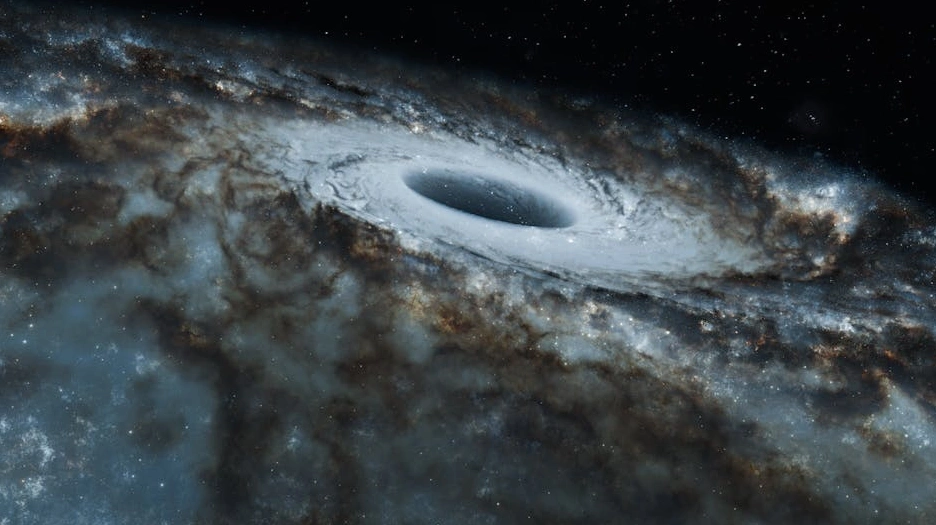
Uncover the Physics of Stars and Planets
Dive deep into the core of astrophysics. This module covers the complete lifecycle of stars, from nebular clouds to black holes. You'll learn about stellar classification, nuclear fusion, and the forces that govern their evolution. We then turn our focus to planetary science, exploring the formation of solar systems, the geology of terrestrial worlds, and the atmospheric dynamics of gas giants. Our approach emphasizes the physical laws that shape these celestial bodies, providing you with a robust framework for understanding the cosmos and our place within it. We move beyond simple facts to explore the 'why' behind cosmic phenomena.
- Stellar Lifecycle Mastery: Understand the birth, life, and death of stars, from protostars to supernovae and black holes.
- Nuclear Fusion Explained: Grasp the core principles of the energy generation processes that power the cosmos.
- Planetary Formation: Learn how planets and solar systems form from protoplanetary disks.
- Comparative Planetology: Analyze the differences and similarities between terrestrial and gas giant planets.
- Atmospheric Dynamics: Explore the complex weather systems and atmospheric compositions of other worlds.
- Gravitational Mechanics: Calculate orbits and understand the fundamental forces that govern celestial motion.
By completing this module, you will not only recognize celestial objects but also understand the intricate physics that dictate their existence. This foundational knowledge is crucial for any serious astronomer, providing the context needed for advanced study and meaningful observation. Empower yourself with the language of the universe and see the night sky with a newfound clarity and depth of understanding. Your journey into the heart of astrophysics starts here, equipping you with the analytical tools to interpret the cosmos on your own terms.
Trace the Evolution of Observational Astronomy
Explore the rich history of humanity's quest to understand the heavens. This module begins with the earliest naked-eye observers and progresses through the revolutionary invention of the telescope. We examine the key figures—from Galileo to Hubble—and the technological breakthroughs that expanded our view of the universe. You will learn the principles behind different telescope designs, including reflectors and refractors, their strengths, and their limitations. Understanding this historical and technical evolution provides critical context for modern astronomical practices and the data we collect today, appreciating the ingenuity that brought us to our current understanding.
- Historical Context: Appreciate the major milestones in astronomical discovery, from antiquity to the space age.
- Key Innovators: Learn about the contributions of pivotal figures like Copernicus, Kepler, Galileo, and Newton.
- Optical Principles: Understand the physics of light, lenses, and mirrors that make telescopes possible.
- Telescope Mechanics: Differentiate between various telescope designs and their specific applications in astronomy.
- Evolution of Observation: See how technological advancements have consistently reshaped our cosmic perspective.
- Foundation of Modern Tools: Gain insight into the historical basis for today's advanced observatories and space telescopes.
This journey through time will deepen your appreciation for the tools of the trade. You will emerge with a comprehensive knowledge of how we see the universe and why different instruments are chosen for specific tasks. This understanding is not merely academic; it is a practical foundation for selecting your own equipment and for critically evaluating astronomical images and data. Connect with the legacy of a science built on centuries of curiosity and innovation, and prepare to contribute to its future.
Master the Art of Manual Celestial Calculation
This is where theory meets practice. Our unique module focuses on the timeless skills of manual astronomical calculation and observation planning—without reliance on automated software. Learn to use star charts, calculate celestial coordinates, predict planetary positions, and plan your observation sessions effectively. We teach you the mathematical techniques to determine rise/set times, angular separation, and transit times. These skills are fundamental to a true, deep understanding of the night sky's mechanics and will make you a more self-reliant and knowledgeable observer, capable of understanding the sky's clockwork.
- Celestial Navigation: Master the celestial sphere, coordinate systems (RA/Dec, Alt/Az), and star-hopping techniques.
- Manual Mathematics: Learn to perform key astronomical calculations by hand, reinforcing your theoretical knowledge.
- Observation Planning: Develop the skill to strategically plan what to observe and when, for optimal viewing.
- Software Independence: Build confidence in your own abilities, reducing reliance on 'black box' planetarium apps.
- Deeper Understanding: Gain an intuitive feel for the motions of the sky that can only come from manual practice.
- Problem-Solving Skills: Enhance your analytical abilities by applying mathematical concepts to real-world astronomical scenarios.
In an age of automation, these foundational skills set you apart. By learning to calculate and plan manually, you engage with astronomy on a more profound level. You will not just be a passive user of technology but an active, knowledgeable participant in the practice of observation. This module will transform you from a spectator into a true practitioner, giving you the confidence and competence to navigate and interpret the night sky with skill and precision, anywhere in the world.